Mini Classes – $50/person

Carolyn Huguenin – Learn to Play – Guitar – 9am-10am

Prerequisites: Basic understanding of the guitar, string names, and how to
hold a pick would be preferred, but not required.
Materials Needed: Picks, tuner, strap, music stand. Adults only: Super glue
(when allowed to dry) can create artificial calluses on sore fingers, so you can
keep playing!
 
Styles/tunes taught: This class is designed for individuals interested in
learning to accompany fiddle players. However, it provides foundational
knowledge for independent learning of any style.
 
Course objective: This course will cover the basic chords, rhythm, and three
types of strum patterns that accompany fiddle playing. We will touch on
some theory about which chords go together to help you predict where you
might go next when accompanying or jamming. Some homework will be given
since chord changes must be practiced to improve change speed (super
glue!). By the end of class, you will be able to back-up fiddle tunes like Boil the
Cabbage Down and Edelweiss.
 
I encourage all questions and will answer them to the best of my ability, and if
I don’t know, I will find out! Please remember—while Fiddle Camp is definitely
fun, it should also challenge you!
 
Materials provided:  A booklet of chord charts, chords for tunes, and other
useful information will be provided. *Materials and instruction may change
based on the general needs of the class.
 

Deanna Wilson – Learn to Play – Mandolin – 9am-10am

Old‑Time Basics: A friendly, hands‑on class for absolute beginners who want to start playing old‑time music. You’ll learn mandolin anatomy and tuning, basic left‑hand fingering, simple chord shapes, and essential right‑hand down‑ and up‑picking patterns for rhythm and melody. We’ll cover a few short, fiddle‑friendly tunes and practice backup grooves so you can confidently join jam circles. Emphasis is on listening, rhythm, and having fun — patient, supportive instruction with lots of repetition and group play. Bring a tuned mandolin, a pick, and a notebook; a tuner and spare strings are recommended.
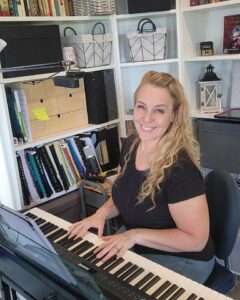
Carolyn Huguenin – Learn to Play – Fiddle – 10:30am-11:30am

Prerequisites:  Having a basic understanding of how the fiddle works, such as
the bow on the strings, etc.

Materials Needed: SIZE APPROPRIATE fiddle and bow, rosin, tuner, music
stand, and recording device (optional). An extra set of strings has been
helpful in the past. You never know!

Course Objective: This class is designed for beginners who are new to the
fiddle. We will start with the basics: learning about the parts of the instrument,
how to hold it properly, correct bow hand technique, finger placement,
scales, and basic music theory. We’ll cover proper hand and arm positions to
help make learning smoother and faster. By the end of the course, students
will be able to play several easy tunes, preparing them for more advanced
pieces. The class includes both adults and children, and I aim to address the
needs of everyone. For children under 8, it's recommended that a parent
attend as well. If you or your child need additional assistance, I am happy to
offer extra help after class.

I encourage questions and will answer them to the best of my ability, and if I
don’t know, I will find out! Please remember—while Fiddle Camp is definitely
fun, it should also challenge you! So, please, be patient with yourself while
you learn!

Materials Provided: A spiral-bound booklet of all tunes and instruction will be
provided.


Deanna Wilson – Learn to Play – Vocals – 10:30am-11:30am

Round up your voice for songs of the hills! This upbeat vocal class explores old‑time singing traditions—learn classic repertoire from the Appalachian and Southern mountain styles, simple two‑ and three‑part harmonies, and call‑and‑response techniques. We’ll focus on healthy breathing, clear phrasing, and phrasing that sits comfortably with fiddle accompaniment, plus tips for singing in informal settings like jams and around the campfire. Exercises will be accessible to all levels, with guidance on learning tunes by ear, finding your part, and arranging small harmony parts on the fly. Bring your voice, an eagerness to listen and sing with others, and a few favorite songs if you have them.
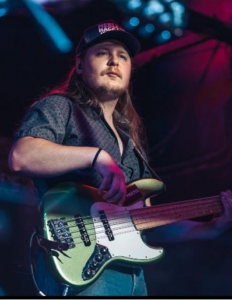
Jake Wilson – Ukelele – 3:30pm-4:30pm first day then will be assigned 3:30pm-4:30pm or 5pm-6pm

Ukulele at Old-Time Fiddle Camp
 
A welcoming, all-ages ukulele class for beginners and seasoned players alike. Day 1 begins with a quick assessment to place students; after that we split into two one-hour groups:
– Beginner/Chording: fundamental chords, strumming patterns, rhythm, and simple camp tunes—perfect for first-timers or players learning accompaniment.
– Intermediate/Seasoned: advanced chord voicings, syncopation, rhythm accompaniment for fiddle tunes, and ensemble playing.
 
Bring a tuned ukulele (soprano/concert/tenor), a tuner, and a willingness to play with others. Fun, collaborative, and focused on making music for camp sessions.
 

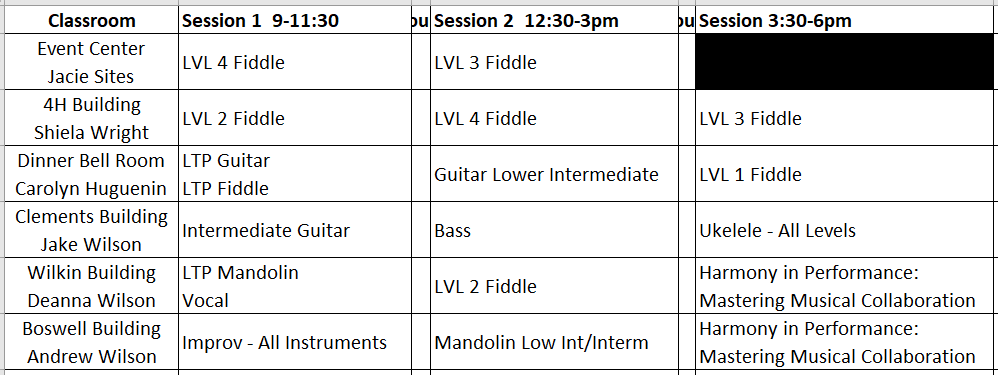
Session 1 Classes – 9am-11:30am – $62.50youth/$112.50adult

Jacie Sites – Fiddle – Level 4

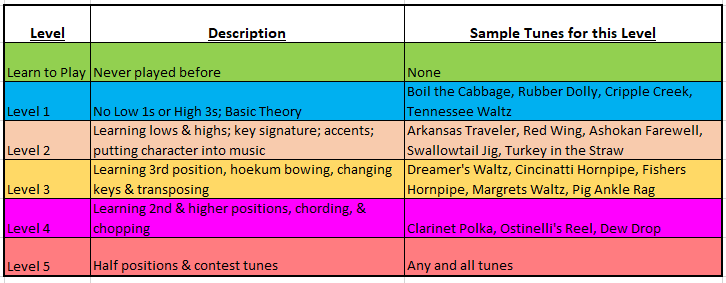
Level 4 is for fiddlers ready to play with more confidence and dynamic power. We explore higher positions, chording, chopping, and grooving with strong rhythm while playing driving Irish & Cape Breton tunes, Appalachian fiddle music, dark minor-key Celtic melodies, gypsy/show tunes, sea shanties, and rich harmony parts.

You’ll learn to:

  • Play in higher positions more confidently

  • Add chords and chopping

  • Lead with strong rhythm

  • Play harmony confidently


Sheila Wright – Fiddle – Level 2

We’ll be talking about some basic theory, chords and how they fit the music.  Why intonation is important.  Some techniques to help you practice more effectively (also known as Sheila’s Salads) Tunes you should know already: Arkansas Traveler, Devil’s Dream, Swallow Tail Jig.  Be familiar with the keys of C, G, D, and A.  

Bring your music-related questions and we’ll add them into the plan.  Notation with tab will be handed out on the first day. We’ll record tunes as we learn them, so bring a device.  See you soon! 
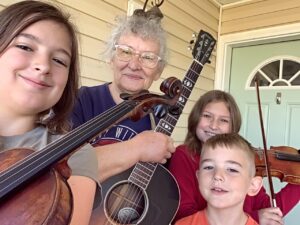
Jake Wilson – Back-Up Guitar – Intermediate

Level: Intermediate (for guitarists comfortable with basic rhythm, chords, and simple lead fills)
 
Class Description:
This hands-on class teaches guitarists how to provide tasteful, supportive accompaniment for old-time fiddle tunes. Emphasis is on groove, form, chord choices, drive, and dynamic interaction with fiddlers. Students will learn to create rhythmic and harmonic frameworks that enhance melodies without overpowering them, using common old-time structures and repertoire.
 
Learning Objectives:
– Read and follow common old-time tune forms (A/B, repeats, breaks).
– Use appropriate chord voicings, bass lines, and drone techniques for G, D, C, A, and modal tunes.
– Lock in with fiddle rhythm and create a steady, propulsive accompaniment.
– Add tasteful fills, licks, and melodic backup that complement rather than compete with the fiddle.
– Manage dynamics, space, and instrumentation in ensemble settings.
– Develop quick arrangements for common tunes and accompany multiple fiddlers.
 
Prerequisites:
– Comfortable with open chords (G, C, D, A, E, Em, Am) and basic barre chords.
– Able to play steady quarter-note and alternating bass patterns, and basic rolls/patterns.
– Basic knowledge of keys commonly used in old-time music (G, D, A, C).
 
Class Components / Weekly Syllabus (adaptable):
1. Foundations: Role of guitar in old-time; listening and ear-training; essential rhythms and time feel.
2. Chord Choices & Voicings: Open-string drones, partial chords, double-stops, and movable shapes.
3. Bass & Rhythm Patterns: Alternating bass, boom-chuck, Travis-style rolls adapted for old-time.
4. Modal & Drone Tunes: Backing tunes in modal keys (mixolydian, dorian) and using droning strings.
5. Breaks & Fills: Adding short melodic fills, tasteful turnarounds, and breaks between fiddle phrases.
6. Ensemble Skills: Cueing, following the fiddle, managing dynamics, and arranging for multiple players.
7. Repertoire Practice: Apply techniques to camp tunes (e.g., “Old Joe Clark,” “Soldier’s Joy,” “Blackberry Blossom”).
8. Performance: Group accompaniment for fiddlers; critique and refinement.
 
Outcomes / Skills Gained:
– Confidently accompany fiddlers in dance tunes, reels, and breakdowns.
– Flexible accompaniment toolkit (rhythms, voicings, fills) usable in jam and performance settings.
– Improved listening, timing, and ensemble awareness.
 
– Instructor will offer suggested adaptations for advancing or simplifying parts.


Andrew Wilson – Improv (All Instruments)
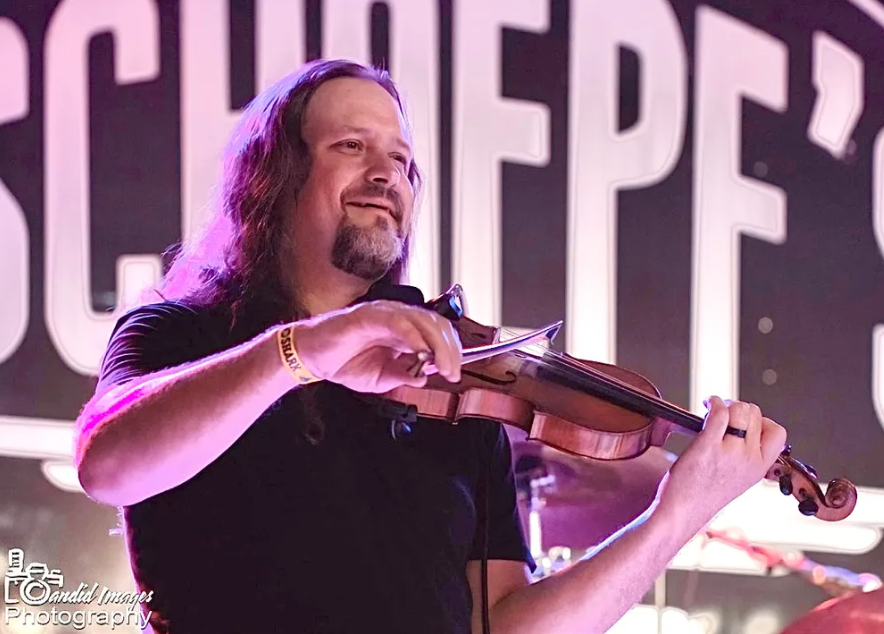
Course Description:
A focused, high-energy workshop for intermediate to advanced players of fiddle, guitar, bass, mandolin, clawhammer/tenor banjo, and related acoustic instruments who want to deepen their improvised playing within the Old-Time tradition. Through ear-based learning, ensemble practice, and contextual studies of regional styles, students will expand melodic and rhythmic vocabularies, develop responsive accompanimental choices, and cultivate confident, musical improvisation that honors the groove and repertoire of traditional Old-Time music.
 
Learning Goals:
– Build improvisational fluency using modal and scale-based approaches common in Old-Time tunes (major, mixolydian, dorian, pentatonic, modal drones).
– Develop phrase-building, motif development, and call-and-response techniques appropriate to reels, jigs, breakdowns, waltzes, and slow tunes.
– Improve ensemble listening, leader/follower dynamics, and real-time arranging within a band context.
– Expand accompaniment toolset for harmony instruments (guitar, mandolin, banjo, bass): tasteful fills, basslines, rhythmic drive, cross-picking, and drone-based support.
– Strengthen bowing, double-stopping, and rhythmic variation for fiddlers to enhance improvisational options.
– Learn stylistic ornamentation, groove choices, and culturally informed phrasing that respect Old-Time aesthetics.
 
Prerequisites:
– Comfortable playing tunes at performance tempo in several Old-Time styles.
– Basic knowledge of standard keys (G, D, A, C) and common modal tunings for fiddle.
– Ability to read chord charts or tablature a plus but not required—ear/feel focused.

Session 2 Classes – 12:30pm-3pm – $62.50youth/$112.50adult

Jacie Sites – Fiddle – Level 3

This is where your fiddle starts to sing. We move beyond basic tunes into more advanced positions, quick bow changes, and key changes that add confidence and flair to your sound. Expect beautiful waltzes, gypsy and show-style melodies, minor-key Celtic tunes, sea shanties, and a few fun harmony parts.

You’ll learn to:

  • Gain confidence playing technical skills (ex. shifting, vibrato, double stops and more)

  • Improve tone, flow, and bow control

  • Change keys with confidence

  • Play simple harmony parts

  • Add fun ornaments and emotion and style to your playing

Sheila Wright – Fiddle – Level 4

Please be fairly comfortable with your instrument and playing quickly.  Know upper level tunes with double stops: Tunes like Big John McNeil, Goodnight Waltz, Money Musk.  We’ll talk about positions, fingerings, and we’ll do some fast tunes,  shmaltzy waltzes, and lively choice tunes. And Salads!  Always Salads!  

Bring your recording device and music questions!  

Carolyn Huguenin – Back-up Guitar – Lower Intermediate

Prerequisites: Well-acquainted with the guitar, knowledge of basic chords,
can play 4/4 and 3/4 timing.
 
Materials Needed: Picks, tuner, guitar strap, capo (optional), and music stand.
Styles/tunes taught: This class will focus on fiddle player accompaniment,
chord knowledge, rhythm, and essential theory.
 
Course objective: We will learn some theory, movable chord shapes
(bar/swing), chord variations, progressions, rhythm, and more! Some
homework will be given since chord changes must be practiced to improve
change speed.
 
I encourage all questions and will answer them to the best of my ability, and if
I don’t know, I will find out! Please remember—while Fiddle Camp is definitely
fun, it should also challenge you!
 
Materials provided:  A booklet of chord charts, chords for tunes, and other
useful information will be provided. Upon request, fiddle tune recordings can 
be sent to you. *Materials and instruction may change based on the general
needs of the class.

Jake Wilson – Bass

Build a dependable, confident bass role in both jam sessions and live gigs — and have a blast doing it. This hands-on class explores the bass’s dual job as a rhythmic engine and harmonic foundation, with emphasis on Western swing, bluegrass, and fiddle-tune repertoire. We’ll feature the music of Bob Wills alongside other classic tunes, focusing on technique, practical music theory, idiomatic bass vocabulary, ear-playing skills, and real-world application using chord charts and recordings. Class recording is encouraged.

Prerequisites No written notation will be provided. Students should already know the fingerboard layout and be comfortable with major and minor triads.
Deanna Wilson – Fiddle – Level 2

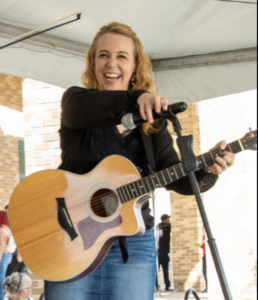
Explore a fresh set of tunes designed to deepen your understanding of keys, finger patterns, and bowing while building repertoire. We’ll work with uncommon melodies and harmony parts to challenge your ear and expand musical choices. Class uses fiddle tab and aural learning—no standard notation provided. Recordings will be supplied; you’re welcome to record along during class. Suitable for players who want to improve technique, feel, and musical confidence.

Andrew Wilson – Mandolin – Low Intermediate / Intermediate
Description:
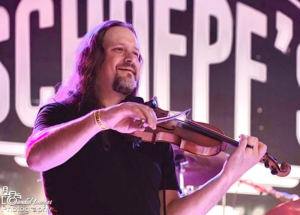
This mandolin class is designed for fiddle players and non-fiddle players alike, focusing on the overlap between fiddle and mandolin technique and repertoire. You’ll learn how to translate fiddle phrasing, bow-style articulation, and melodic habits onto the mandolin—so even if you don’t play fiddle, you’ll come away with a fiddle-informed approach to melody. The class emphasizes ear-based learning, moveable scale shapes, and idiomatic ornamentation used in fiddle-led styles.
 
What we’ll cover:
– Adapting fiddle phrasing and bowing concepts to mandolin picking and articulation
– Essential moveable melody shapes and where they sit on the fretboard
– Simple doubles, slides, and ornaments that give a fiddle-like sound
– Phrasing, rhythm, and dynamics for playing with fiddles and within acoustic ensembles
– Learning tunes by ear and improving musical memory
 
Materials provided:
– Fiddle tab using the instructor’s tablature system (no standard notation)
– Backing and demonstration recordings for practice and slow-learning
– Suggested practice sequence and tune list

Session 3 Classes – 3:30pm-6pm – $62.50youth/$112.50adult

Sheila Wright – Fiddle – Level 3

Tunes you should know:  Cincinnati Hornpipe, Red Haired Boy, Swinging on a Gate, Tunes with string crossings and a faster tempo.  We’ll talk about more advanced theory, how to construct major and minor scales and arpeggios.  More Salads!! We’ll be exploring keys like F, Bb, Eb (don’t be scared) 

Music-related questions are welcome, and I have notation/tab books on the first day. Bring something to record with.  

Carolyn Huguenin – Fiddle – Level 1
Prerequisites:  Students should have a few basic songs memorized and
playable; such as Boil the Cabbage Down, Rubber Dolly, and Cripple Creek,
etc. Students should also understand the three common time signatures.
 
Materials Needed: Size appropriate fiddle, tuner, music stand, and recording
device (optional). An extra set of strings has been helpful in the past. You
never know!
 
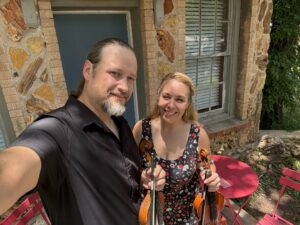
Styles/tunes taught: By the end of class, students will be playing several
tunes, ranging from quick and easy to more challenging pieces to take home
and continue to work on.
 
Course Objective: This course will cover proper form, like hand and arm
positions. We will discuss techniques to achieve the best sound quality from
your fiddle. Instruction will primarily use tablature, though most tunes will
also be available in notation. Additionally, we will touch on basic music
theory, explore bowing techniques for various tune styles, and address finger
placement for different keys signatures.
 
I encourage all questions and will answer them to the best of my ability, and if
I don’t know, I will find out! Please remember—while Fiddle Camp is definitely
fun, it should also challenge you!
 
Materials provided: A spiral-bound booklet of all tunes and instruction will
be provided. *Tunes and instruction may change based on the general needs
of the class.

Andrew & Deanna Wilson – Harmony in Performance: Mastering Musical Collaboration – ALL Instruments

Bring your instrument and play together like a seasoned Old‑Time band. This hands‑on class welcomes fiddles, guitars, banjos, mandolins, basses, and other acoustic instruments. Students will be grouped into small bands to learn arrangement, rhythm, accompaniment patterns, part‑sharing, listening skills, and stage presence specific to Old‑Time fiddle repertoire.
 
What we’ll do
– Form small groups and assign roles (lead, backup, rhythm, bass).
– Teach Old‑Time tunes, call‑and‑response playing, and common drone/harmony approaches.
– Practice group skills: listening, dynamics, tempo control, cueing, and simple arranging.
– Work on smooth transitions, breaks, and double‑time/slow‑time adaptations.
– Rehearse stage setup and basic performance etiquette.
 
Who should join
– All ages/levels with basic competency on their instrument (comfortable playing simple tunes/chords). Open to fiddles, guitar, banjo, mandolin, bass, and similar acoustic instruments. Limited spots per instrument — sign up early.
 
Schedule & performance
– Daily group rehearsals with instructor coaching.
– Final performance: Thursday evening (camp showcase). Each small band will perform one or two tunes.
 
Outcomes
– Play confidently in a small Old‑Time band.
– Learn to arrange and support tunes musically.
– Gain performance experience and ensemble communication skills.
 
Limited instrument spots — register now to secure your place and be part of the Thursday evening showcase.